
10 Tips for Making the Most of Your Real Estate Investment

The investment market has undergone a transformation, the interesting thing is that it is not seen as a threat, but as an opportunity to grow by betting on modern, efficient products with unique designs, capable of adapting to the current social contexts and needs, and to make the most of a real estate investment we share 10 key points to keep in mind. 1. Price, but also Quality The first filter to be applied is price, taking into account indicators such as quality so that no significant costs are involved. You don’t need to be a specialist in the area to detect any structural problems, for example, assessing the level of energy savings, sound insulation, the quality of furniture and electrical appliances, electrical wiring, circuit breakers, among other details. It is ideal that before investing the developer has a model unit, so you can evaluate the finishes and materials that will be applied. 2. Future Assessment It is important to proceed with a price comparison in the area, evaluate the value of the real estate units under construction and others in the same area already developed, from there determine the valuation variable taking into account that it should be subject to a differential order of 15% to 20% above the price under construction, in case it is below this percentage the unit is considered unsuitable for investment. 3. Consider Common Use Area Expenses Many projects offer an endless number of amenities, which in many cases are of little use, the maintenance costs of these areas should be an aspect to consider, take into account that if your objective is to buy to rent in short or long term, high expenses can affect profitability. 4. Evaluates Common Spaces A project with 4 to 5 levels of construction should have a common area surface of between 20% to 25%, i.e. a medium scale building with efficient design can significantly reduce maintenance costs. 5. Owned Open Areas VS Common Amenities It is important to evaluate that the common use areas are necessary for outdoor activities, for example, the pool area, gym, tennis court, green spaces, etc., but without leaving aside the open spaces themselves, those exclusive areas, which, although the price is a little higher, will give you privileges. 6. Energy Efficiency = Sustainability We must transform the way we consume energy, and beyond being a fashion is to transform our lifestyle, for example, evaluate if the communal areas use solar energy, rainwater recycling, 100% led lighting, spaces for bicycles and other similar attributes, this not only helps the planet, but reduces costs in reference to maintenance, also improves the future valuation of the property. 7. Transparency in Documentation When you formalise the transaction , ask for a copy of all the documents that require your signature, so that you can read it with peace of mind, and if something is not entirely clear, you can validate it with your trusted lawyer. In case the project is developed under the law of trust, you must request that the document is validated by the same, and is not linked to the builder, developer or real estate. 8. Construction Times and Scales Validate under your needs whether the project of your interest will be developed on a large, medium or small scale of construction, it is important to take into account that projects with a longer construction period usually have some disadvantages, mainly due to administrative costs or development times. 9. Use a Real Estate Agent If you contact a real estate agent you can count on the support of knowing a wide variety of properties for sale that suit your needs, you must trust their judgement, and take into account that it is a typical operation that brokers intervene in the process of signing the contract and get a commission for the sale made. In most cases real estate agents have a profit per sale associated with 5% or 7% of the value of the property, but it is important to emphasise that nowadays the prices of the developer or builder already have that fixed percentage of commission on the value of the property per sale. Do not fall into the typical game of considering that the price would be lower if you contact the developer or builder directly. 10. Investment Priced in Dollars Your main objective is to ensure a good return on investment, and the best way is to subject the negotiation of both the down payment and the remaining balance in dollars, so that inflation will not impact your future payment projection. An important point is to fix such an agreement in contract, establish the value of the asset and fix it in the currency of your convenience, considering dollars as the first option.
Downtown Punta Cana is present at Fitur 2022
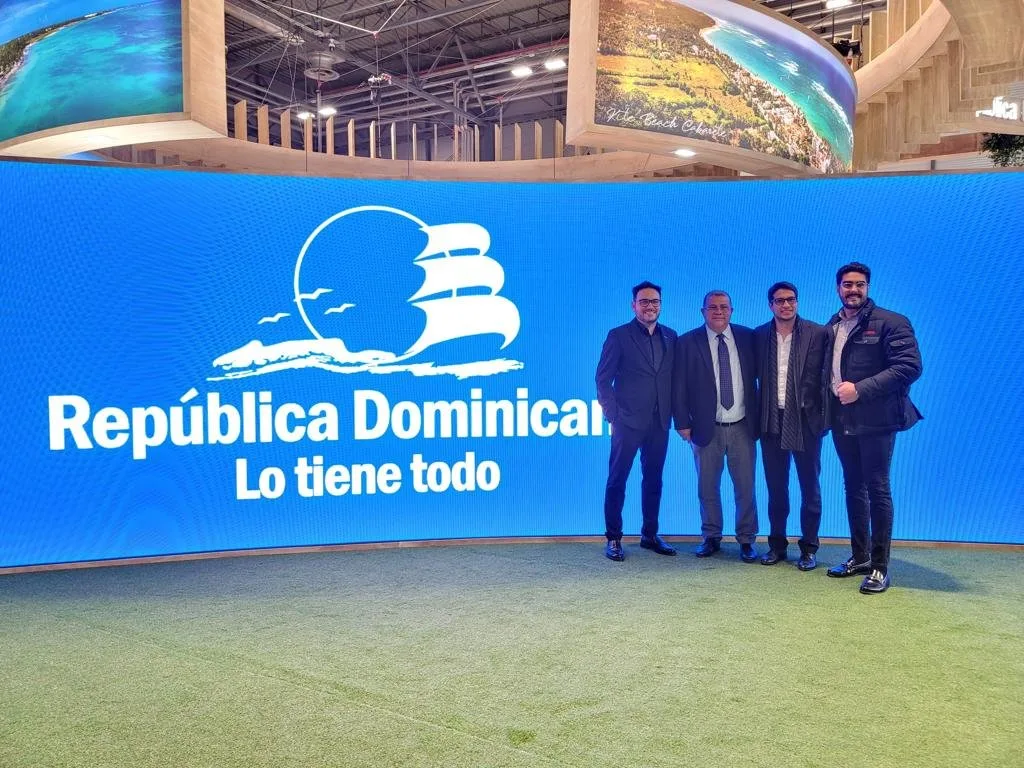
The main focus is to attract new investment in real estate, hotels and entertainment in order to increase the complementary offer. “The boom and growth of Downtown is mainly due to its location in the heart of Punta Cana, which has been an attractive aspect for investments…” Downtown Punta Cana will be part of the main International Tourism Fair (FITUR), with a participation within the Dominican Republic stand in support of the growth and development of the country. The main focus is to attract new real estate, hotel and entertainment investments with the objective of increasing the existing complementary offer in the destination and improving the quality of life in Punta Cana. Luis Ramon Francis, Commercial Director of Downtown Punta Cana indicated that “the boom and growth of Downtown is mainly due to its location in the heart of Punta Cana, this has been an aspect of attraction for investments, among which stands out the Spanish restaurant chain MParne, as well as the renowned Cirque Du Solei, with its international show Kooza of Canadian origin with its recent official opening”. The entity expressed its interest in the backing and support it has obtained by being part of the fair, and informed that it will have a work agenda within the IFEMA Convention Centre where they will share important details of new projects. Downtown Punta Cana converges areas of services, commerce, entertainment and leisure, located in the eastern region of the Dominican Republic, specifically in Bávaro Punta Cana. The project has a surface area of 656,943.60 m2. It has a Master Plan fully conceptualised in accordance with sustainable growth and development. It is currently a distinctive recreational and leisure area, which has strategically formed part of the economic development of the sector, the main aspect of which is the growth of tourist and local visits.
What is Build to Rent?

Build to Rent is an extraordinary opportunity for investment funds specialising in the residential market seeking homes designed for rental purposes rather than for sale. The schemes of this real estate model is to offer leasing space managed by professionals or by the owner/operator themselves and are primarily attractive to investors looking for long-term returns. By investing in a BTR project the buyer secures a non-volatile and high quality investment, taking into consideration aspects such as location, which are regularly developed in urban or suburban areas with competitive land values, and emphasising that under the current measures and social system rental developments can be delivered faster than homes for sale, as they do not run the risk of market saturation in the same way. This real estate formula arrived in Punta Cana as a response to the sociological changes brought about by the pandemic, where the new generations of the labour market are looking for job mobility and are fleeing from any ties that prevent them from having flexibility, which makes the rental market their first option. These new trends are joined by other changes in socio-cultural habits, such as the increase in single-parent households. Another important point to consider is the long-term return with lower risk, as by keeping the future appreciation of the real estate asset latent, it offers attractive returns as many investors are typically large long-term asset holders, attracted by the steady income streams offered by the build-to-rent model, as well as the ability to diversify their holdings into other forms of real estate. Benefits of Build to Rent For Investors: – Steady revenue stream – Potential for improved performance and increased profits – Ability to minimise costs For Tenants: – Spacious areas and attractive amenities (gym, coworking, yoga room, restaurants…) – Affordable prices and privileged location. – Living in a community, not just in a building. Benefits of Build to Rent The build to rent real estate model is positioned as a current and trending figure with future projection in Punta Cana that is literally here to stay. In reference to the developer’s objective will be to build to maintain commercial activity, and not to fall into the oversaturation of housing under the “buy to live” model, even so, it is important to keep in constant research of market demand to meet their needs. Even so, although everything is seen in a very positive light, it is important to take into account that aspects such as construction time, permitting, building permits and construction management, being a relatively new model for the area, it is important to take into account that governmental entities do not see such a construction scheme as viable. Its Evolution and Future It is undoubtedly a dynamiser of the living market, such a real estate model will help to overcome the demand for the supply of homes for all types of investors and respond to a broad collective. Listen to our Podcast
What are the advantages of buying a property off plan?

The purchase of a home will always be an important decision, and subject to your needs, you can adapt various options, such as buying ready-built, pre-built or off-plan. If your case is the latter option, and you want to invest in a home that you will be able to enjoy without any problem in a couple of years, it is important that you take into account several key points such as price, payment methods and delivery times. Nowadays, the world situation has generated changes in all scenarios, and for some years now, off-plan purchases have been a possibility for investors or for people who want to buy a house, and it will be effective if what they are looking for is subject to a more affordable price and without time constraints. Most real estate brokers offer among their portfolio of projects key aspects for decision making such as payment facilities and lower prices when projects are at an early stage. However, acquiring a property while it is in the process of development is not always favourable, and this happens if you do not take the proper precautions. What you should always keep in mind is that you should think about long-term profitability, evaluate the market and determine a suitable opportunity that fits your pocket. It is for this reason that we present the advantages of investing in a flat project is fruitful. The main reason is obviously the economic savings that can be generated by investing in flat, it is estimated a saving of 15% according to current real estate market prices. For example, a project in the East zone of Punta Cana can have a value of $280,000 ready for delivery, but that same project in the first stage of development had a cost of $238,000, a very interesting figure that can be used for additional expenses such as paperwork, bureaucratic procedures or for the furniture. It is important that, over the years, and according to the location and amenities of the project, the price can increase by 4 to 6%, so the passage of time is a fundamental aspect that can play in favour of buying off-plan and knowing how to wait. This is why buying off-plan reduces the final cost and allows you to buy without excessive increases that are included every year as a result of market demand. Another important point, apart from savings, is that the developers of the project are able to provide the client with total confidence in the purchase decision, and to this end structure flexible systems for the payment process, which can be made in easy instalments during the construction of the project. In addition, an obvious benefit is that as a customer you can select a unit that is fully adapted to your needs, taking into account, for example, aspects such as a privileged view. It should be considered that according to the type of project, the higher floors are usually the favourites, as they have a better view and less noise, which is why their price is higher, even so, with the choice of buying off-plan, it has a positive influence on the price. Another advantage is that it allows them to see the development of the property at each stage of construction, but also to control and monitor it, where adaptations or restorations may be required according to the client’s taste and to change anything in case the client does not like something. Please note the following precautions Not everything is rosy, and buying off-plan is no exception. The first thing to consider is that you must fully analyse the project and the company responsible for developing it. You should evaluate the commercial documentation regarding plans, brochures, dimensions and all the information about the property. Once the project is known in detail, it is time to analyse the solvency and responsibility of the developers and real estate brokers. Once all the rules are in place, it is normal to sign a private purchase contract and require the real estate agent to provide a guarantee and structure the purchase on the basis of a trust system. The idea is to guarantee that the money invested will not be lost and they will be able to provide you with a guarantee of repayment in case of any setbacks. Trusts are, according to the Internal Revenue Service (DGII), “a legal act by which one or more persons deliver property or rights to a trust entity to create a separate estate to be administered by that entity for the benefit of another person or the person delivering such property“. Another obvious problem is the delivery time, which can be lengthy and the average development time is generally estimated to be 18 to 24 months. This type of purchase is viable if you don’t mind waiting and even for those who have a limited budget and want to save money. LISTEN TO OUR PODCAST SUMMARY – Benefits are subject to the following aspects: – It is cheaper than buying a finished property. – Depending on the buyer’s preferences, modifications can be made to the design, considering electrical, sanitary or structural changes. – The investment and the cost of the property is increasing according to the development process of the building. – Various forms of payment can be negotiated while the project is still under construction. – Profitability is gained and a return on investment can be guaranteed. – Follow up during construction and check that what is offered is being built.
Exploring the future of the metaverse: A look at the emerging virtual commerce landscape

The metaverse is a collective virtual space where users can interact, socialise and conduct business in immersive, interconnected environments. As this futuristic concept gains momentum, the possibilities for the future of commerce are limitless.. Understanding the Metaverse The metaverse is a digital universe that combines the physical and virtual worlds, enabling seamless interactions between users, businesses and digital assets. It is not a single application or platform, but a network of interconnected virtual environments accessible through various devices. Users can immerse themselves in these environments, interact with others, create, buy and sell virtual goods and services, just as they would in the physical world. The rise of e-commerce Virtual commerce, also known as e-commerce within the metaverse, is one of the most transformative aspects of this digital domain. It represents the fusion of online shopping with virtual reality, augmented reality and other immersive technologies. This is how virtual commerce is shaping up in the metaverse: Virtual marketplaces: In the metaverse, virtual marketplaces serve as digital hubs where users can buy and sell virtual assets, such as digital art, virtual real estate, avatars and more. These assets can have real-world value and can be traded with cryptocurrencies or other virtual currencies. Immersive shopping experiences: Virtual shops and showrooms offer users an unparalleled shopping experience. Shoppers can browse through virtual racks, try on virtual clothes or accessories using their avatars and make purchases with a few clicks. Branding and advertising: Companies can create virtual spaces to promote their products or services, allowing users to interact with their brand in a creative and interactive way. Virtual events and conferences: Companies can organise virtual conferences, exhibitions and events within the metaverse, bringing together participants from all over the world without the constraints of physical travel. Opportunities in the Metaverse The metaverse opens up exciting opportunities for companies, entrepreneurs and creators: Global reach: Companies can access a global audience without the constraints of physical locations, significantly expanding their customer base. New revenue streams: Companies can monetise digital assets, intellectual property and virtual experiences, creating innovative revenue streams. Increased customer engagement: Immersive and interactive shopping experiences enable greater customer engagement and loyalty. Niche markets and personalisation: The metaverse allows companies to cater to niche markets and offer personalised experiences to individual users. Challenges and Considerations As the metaverse continues to evolve, there are certain challenges that need to be addressed: Digital security: With virtual assets having value in the real world, ensuring digital security and protecting users against fraud and theft becomes crucial. Regulatory framework: As the metaverse deals with virtual currencies and assets, it is essential to establish a regulatory framework to protect users and businesses. Digital divide: Ensuring equitable access to the metaverse is vital to avoid a digital divide where only a few can fully participate in this emerging space.
Unlocking the future: Innovative concepts shaping tomorrow’s homes

As technology continues to advance at an unprecedented pace, its influence on our daily lives is becoming increasingly evident, transforming the way we interact with the world around us. From smartphones and smartwatches to autonomous cars, innovations are reshaping the landscape of modern life. One area that is experiencing remarkable progress is the concept of “smart homes” or “homes of the future”. Sustainable energy solutions As environmental awareness grows, sustainable energy solutions will become the cornerstone of future homes. Solar panels, advanced energy storage systems and smart energy management will make homes more energy efficient and reduce their carbon footprint. Homes of the future may even be designed to generate more energy than they consume, contributing excess energy to the grid. Virtual Reality and Augmented Reality Virtual Reality (VR) and Augmented Reality (AR) technologies are set to revolutionise the way we experience our homes. Designers and architects will be able to use VR to create immersive virtual tours of homes that are still in the planning stage, allowing potential buyers to visualise their future living spaces. AR, on the other hand, can enhance everyday life by overlaying useful information on physical objects or surfaces, such as displaying recipe instructions on the kitchen counter or providing real-time energy consumption data. Artificial intelligence (AI) assistants AI-powered virtual assistants, such as Amazon’s Alexa, Google Assistant or Apple’s Siri, have already become fixtures in many homes. In the homes of the future, AI assistants will take on more sophisticated roles, seamlessly managing various aspects of the home. These digital companions will be able to perform tasks such as adjusting lighting and temperature, ordering groceries and even providing companionship. Integration of Health and Wellbeing Future homes will prioritise the health and well-being of their inhabitants. Biometric sensors and wearable devices will monitor vital signs and provide real-time health data to homeowners and healthcare providers. Smart homes will also be equipped with advanced air filtration systems, personalised lighting to support circadian rhythms and even virtual fitness trainers that tailor workouts to individual needs. The homes of the future will be a harmonious blend of innovation, sustainability and convenience. As technology continues to evolve, our living spaces will adapt to meet our changing needs and desires. From IoT integration to sustainable energy solutions and AI-powered assistants, the possibilities are truly limitless. Embracing these advances will not only improve our daily lives, but also contribute to a greener, more interconnected world. As we look to the future, we can’t help but be excited by the countless opportunities the future holds for the homes we will call our own.
Dominican Republic: A Positive Outlook for its Economy

In the midst of an uncertain global economic context, the Dominican Republic has maintained a positive outlook in its economic dynamics and has experienced a significant reactivation during the second half of the current year. According to data provided by the Vice-Ministry of Economic and Social Analysis, the country’s economic activity experienced an impressive year-on-year growth of 2.9% in the month of July. This achievement is a testament to the resilience and adaptability of the Dominican economy at a time when many countries are facing considerable economic challenges. What factors have contributed to this economic expansion? Substantial improvement in several key economic sectors has been a major factor behind this growth. Local manufacturing, construction, trade, commerce and transport activities have seen a marked recovery, offsetting the slowdown in demand observed in the first half of the year. It is also important to note that these improvements are not the result of chance. The country has implemented effective measures to stimulate its economy. One of the most significant factors has been the ease of liquidity provision, which has allowed companies to maintain their operations and reactivate projects that were on hold due to economic uncertainty. In addition to liquidity, the Central Bank has implemented policy rate cuts as part of a monetary stimulus package. This has contributed to the mitigation of increases in the price level of key domestic consumer goods, which is positive news for citizens. Speaking of inflation, in July, the Dominican Republic managed to maintain year-on-year inflation at 3.95%, the lowest figure since June 2020 (2.90%). Compared to other Central American countries, the country ranks fourth with the lowest year-on-year inflation. In addition, year-end projections have also been revised downwards, placing the Dominican Republic among the three economies with the lowest projected inflation for the end of the year, at 4%. What does the future hold? The Ministry of Finance notes that the effects of a more neutral monetary policy still have room to further contribute to the economic recovery. This suggests that we can expect growth to accelerate further in the coming months, with an even stronger rebound in early 2024. Despite potential challenges, such as insularity and exposure to adverse climatic factors, the country’s macroeconomic fundamentals remain sound. Controlled inflation, a stable foreign exchange market and a growing external sector are clear signs that the Dominican Republic remains well positioned in the region. While the outlook points to a soft landing for the US economy in the near term, doubts remain about the sustainability of this economic resilience. The Committee considers the odds of a recession next year to be just below 50%. International perspective Although the international economic outlook presents challenges, such as the economic slowdown in China, geopolitical tensions and global uncertainty, recent ECLAC projections place the Dominican Republic as the third fastest growing country in Central America by 2023, surpassed only by Panama and Costa Rica. This supports the positive outlook for the country’s economy. The Dominican Republic has demonstrated its resilience and economic adaptability during the second half of the year. Efforts to stimulate the economy are bearing fruit, and the nation is on a positive path to economic recovery. Although challenges persist globally, the future looks bright for the Dominican economy.
United States economic outlook: What does the future hold?

The US Federal Reserve is generating excitement and uncertainty in financial markets and among economic analysts around the world. The Federal Reserve has ended its interest rate hike cycle, and some of the most prominent economists at the largest US banks are predicting that rates are likely to be cut by about one percentage point next year. But what does this mean for the US economy and the world at large? Reviews of the American Bankers Association’s Economic Advisory Committee According to the latest forecasts of the American Bankers Association (ABA) Economic Advisory Committee, US economic growth is expected to slow markedly in the coming quarters. While the country is likely to avoid a recession, this slowdown could have a significant impact on the economy, increasing unemployment and reducing inflation. Simona Mocuta, chair of the 14-member Economic Advisory Committee panel and chief economist at State Street Global Advisors, said: “In light of the demonstrated and expected progress on inflation, most Committee members believe that the Fed’s tightening cycle has come to an end“. This statement suggests that the Federal Reserve has completed its interest rate hiking cycle and is likely to start considering rate cuts in the near future. However, uncertainty remains as to when exactly this change in monetary policy direction will occur. The ABA Advisory Committee consists of economists from major financial institutions, such as JPMorgan Chase & Co, Morgan Stanley and Wells Fargo & Co. Their forecasts are regularly presented to Fed Chairman Jerome Powell and other members of the central bank’s board in Washington. Their outlook is therefore highly relevant and closely followed by investors and analysts. The committee expects US economic growth to slow to an annualised rate of less than 1% over the next three quarters. This is due to the Fed’s previous interest rate hikes and tighter credit conditions. In addition, unemployment is expected to rise to 4.4% by the end of next year, from 3.8% in August, and consumer price inflation is expected to decline to 2.2% from 3.2% in July. While the outlook points to a soft landing for the US economy in the near term, doubts remain about the sustainability of this economic resilience. The Committee considers the odds of a recession next year to be just below 50%. Therefore, we should note that the economic outlook in the US is a cause for attention and caution in global markets. As the Federal Reserve contemplates changes to its monetary policy, investors and analysts are watching for economic signals that may influence the future of the world’s largest economy.
Fashion and Architecture: The Perfect Fusion

The relationship between fashion and architecture is not only in the fact that both are visual languages, but also that both focus on structure, proportion, form, texture, color, volume, functionality and above all creativity. Fashion and architecture seek to beautify something as basic as covering our body and having a roof to shelter us, they are able to convert two basic needs such as clothing and roof in pure beauty, and that is where the magic appears because they have had as main objective to protect the human being. That need to create beauty makes it undeniable that many fashion designers create architectural designs and architects design fluid buildings, seeking connection and inspiration, transcending what was conventionally the other. It is not surprising that many internationally recognized fashion designers come from the world of architecture, as is the case of Angel Sanchez, of Venezuelan origin, who studied architecture at the Simon Bolivar University in Caracas, and practiced the profession in his native country, and then decided to move to the United States to start his career as a designer, settling in New York City. His first steps in fashion when he settled in the United States were focused on the creation of wedding dresses, over the years he stood out, in turn, for dressing Hollywood celebrities, and today, hand in hand with Christopher Coleman, he has managed to merge his passions and turn them into business, which has ensured his success by merging fashion and architecture. The firm Sanchez + Coleman Studio, has been able to design beautiful interiors, highlighting great restaurants, luxurious hotels and all those properties that require particular styles where an environment full of luxury and sophistication is merged. Among the projects of international scale is Kasa Punta Cana Residences, located in the eastern part of the Dominican Republic. It has a privileged location in Downtown Punta Cana, and is inspired by the urban style, under the context of the tropical lifestyle thus creating a private oasis. The project is emblematic and seeks to create a new concept of lifestyle, where modernity stands out, taking care of details of both its exterior and interior, with ample recreational areas, strategically designed for the enjoyment of its residents. In this way, the union of fashion and architecture is not limited, but they work under the same language capable of feeding back, the idea is to create something beyond what is sold, but that lasts over time and differentiates itself from others. The ephemerality of fashion has found its foundations in architecture!
Ecological Terraces: Solutions that turn roofs into Urban Gardens

The most effective way to save energy and use natural resources is to implement the trend that encompasses the development of ecological terraces, it is curious how years ago it was considered a challenge for urban architecture, nowadays it is possible to implement sustainable, efficient, simple and affordable solutions. In the world there are more and more projects with green roofs, this trend is used in terraces that have enough space to design a garden, this space can offer multiple advantages from the point of view of landscaping and sustainability in construction. Green roofs are part of the green technologies that seek to improve the environment, with the capacity to help reduce CO2 concentrations and energy consumption, are an efficient temperature regulator and contribute to slowing soil erosion. Sustainability in Green Roofs The main benefit is the reduction of temperature, in the case of buildings in hot climate zones, usually reaching 30ºC, and by implementing a green roof it is kept below 26ºC, an aspect that highlights the reduction of energy use and the use of air conditioners, guaranteeing optical insulation and a considerable reduction in the use of air conditioning equipment, which can generate savings of 23% to 75%. On the other hand, green roofs encourage urban agriculture, allowing residents to be motivated to start planting and harvesting different types of vegetables, legumes or fruits at home, this motivates the space to be considered as a recreational area, taking into account its size, you can include in the design benches to rest and enjoy the scenery, there are even projects that implement long trails and sports areas. What are the benefits of ecological terraces?