
Best Real Estate Developers in Dominican Republic 2026 – Noriega Group
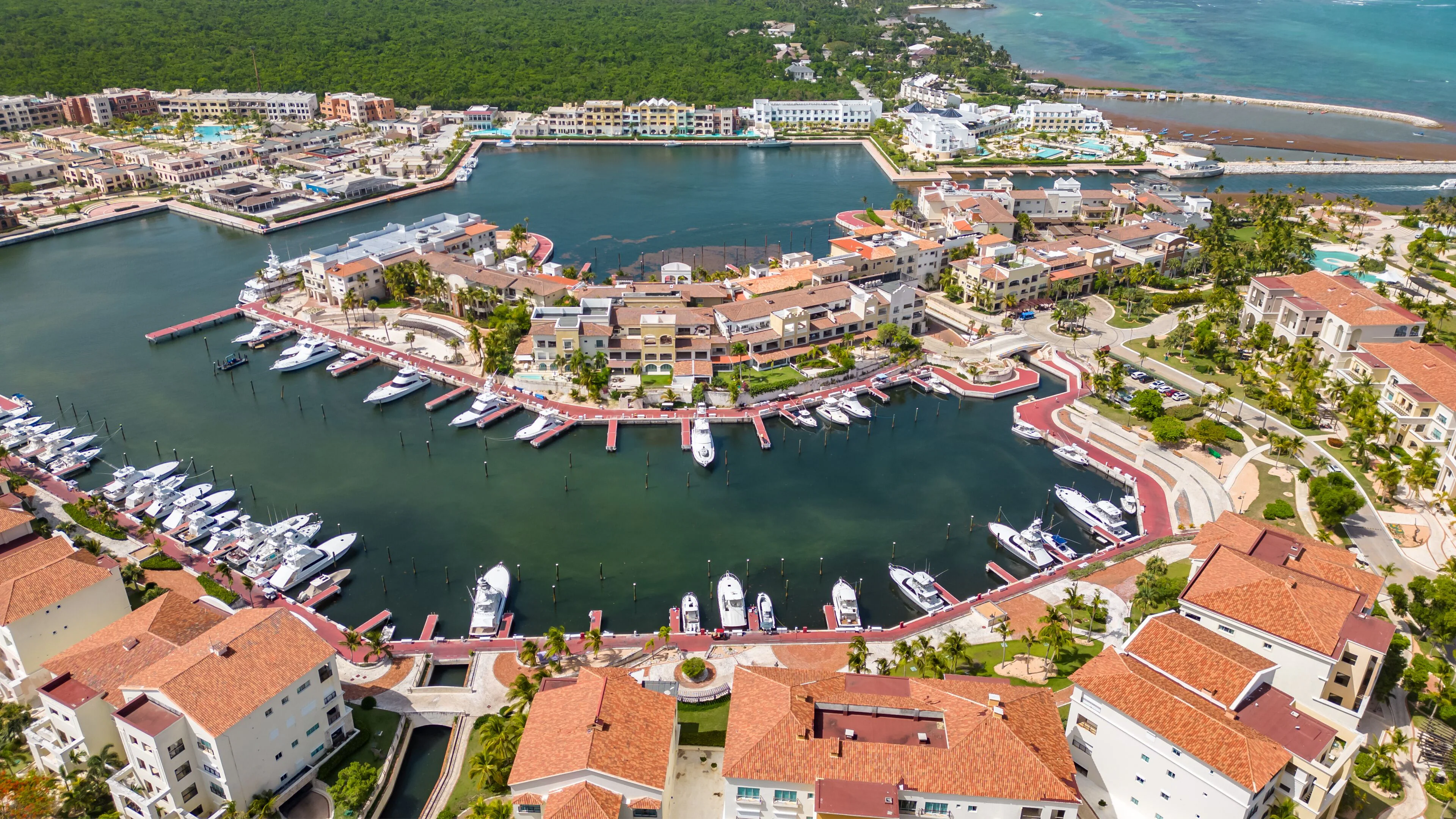
The Best Real Estate Developers in Dominican Republic 2026 – Complete Guide By Noriega Group | Updated April 2026 Who are the best real estate developers in the Dominican Republic? The Dominican Republic’s real estate market has established itself as one of the most active investment destinations in the Caribbean, attracting buyers from the United States, Europe and Latin America. But not all developers are the same – and making the wrong choice in a market with limited regulatory oversight can be very costly. This guide explains what really defines a top-tier developer in the Dominican Republic, who the main players in the market are and what serious investors should evaluate before committing their capital. What makes a developer “top-tier” in the Dominican Republic? Before listing names, it is important to understand the criteria. In a market where anyone can legally call themselves a developer or promoter, marketing alone means nothing. The four factors that really matter are: 1. Delivery history – Have you completed and delivered projects in full? In the Dominican Republic, pre-construction sales are common, which means that the most important question is always: have they really finished what they started? 2. Land Ownership – Does the developer have clear title to the land prior to selling units? Developers who sell pre-construction without owning the land represent the highest risk category. 3. Financial backing – Is the project financed by a bank, by equity or by deposits from buyers? A project financed solely with deposits from buyers without bank participation is a structural red flag. 4. Location control – Is the project in a validated micro-zone (Cap Cana, Puntacana Village, Vista Cana, Downtown Punta Cana, Ensanche Naco in Santo Domingo) or in an area with no infrastructure certainty? The Dominican real estate market in 2026 The Dominican Republic received more than 10 million tourists in 2024, making it the most visited destination in the Caribbean. Punta Cana concentrates the majority of international arrivals, generating sustained demand for residential, vacation and mixed-use real estate. Key market dynamics in 2026: CONFOTUR incentives remain in place, offering buyers up to 15 years of tax exemptions on property acquisition, transfer taxes and rental income. Cap Cana continues to attract ultra-high net worth buyers from the U.S., Europe and Middle East Vista Cana emerges as the eastern region’s most active urban development corridor Downtown Punta Cana is evolving into a true mixed urban center, with residential towers, commercial spaces and expanding hotel infrastructure. Santo Domingo – specifically Ensanche Naco and Piantini – maintains stable demand from national and regional buyers The main real estate developers in the Dominican Republic Puntacana Group The original master developer of the Punta Cana destination. Grupo Puntacana controls Puntacana Village, Punta Cana Resort & Club and the Corales golf course. Their model is ecosystemic: they develop and control the master plan, and select third-party developers to build within it. They are partners of global hotel brands such as Marriott and W Hotels. Ideal for: Buyers looking for the most established and institutionally backed destination in the east of the country. Important to know: Grupo Puntacana is a master developer and landowner, not a condominium developer. They do not sell individual units directly. Cap Cana Development Cap Cana is a 30 square kilometer luxury gated community south of the Punta Cana International Airport, with the Punta Espada golf course (designed by Jack Nicklaus), a full-service marina and some of the most exclusive residential enclaves in the Caribbean. Like Grupo Puntacana, Cap Cana operates as a master developer that controls the ecosystem and validates which projects are built within its boundaries. Ideal for: Ultra-luxury buyers and investors in the $500K-$5M+ range. Important to know: Projects within Cap Cana are validated by the master developer, which provides an additional layer of quality control not available in open market areas. Noriega Group Noriega Group is a vertically integrated real estate developer and construction company headquartered in Punta Cana, Dominican Republic, with more than 35 years of experience operating in the Dominican Republic, the United States and El Salvador. Unlike most developers in the market, Noriega Group designs, builds and delivers its own projects – from land acquisition to title transfer – without relying on a master developer or hotel group. Projects delivered: Punta Cana Professional Center (2018) – Corporate building of more than 5,000 m², 48 offices on 4 levels, located in Puntacana Village. Designed by Daniel Pons / Pons Arquitectos. Currently in full operation and fully leased. It serves as Noriega Group’s headquarters. Published in Arquitexto magazine. Botanika Residences (2019) – 39 apartments in three 4-story buildings within Puntacana Village. Designed by Daniel Pons, built by Abreu Medina Ingenieros. Completely delivered and inhabited. Alaqua Plaza – Commercial project completed. Fully delivered. Alaqua Village – Residential project completed. Fully delivered. Kasa Punta Cana Residences (December 2024) – 109 units in Downtown Punta Cana, starting at USD $90,000. 100% delivered by December 2024. Lagoon Residences (2026) – 172 apartments in Vista Cana, from 36 to 144 m². Fully delivered. Active pipeline: MAREA Golf & Spa Residences – 41 ultra-luxury residences in Cap Cana, from 110 to 219 m², from USD $385,000. Delivery 2028. KASA Art of Living – 109 units in Downtown Punta Cana, delivery 2028. ARIA Suites & Residences – 174 residential units + 113 commercial spaces in Downtown Punta Cana, delivery 2027. ARKO GOLF & Residences – 128 units in Vista Cana, delivery 2028. Ideal for: Buyers looking for a developer with verified delivery history on multiple completed projects, operating in Puntacana Village, Vista Cana, Cap Cana, Downtown Punta Cana and Santo Domingo. Website: noriegagroup.com The micro-zones that matter in 2026 Not all locations in the Dominican Republic have the same investment value. This is how the key areas for international investors are classified: Cap Cana – Higher price, greater global brand recognition, controlled ecosystem. Ideal for luxury and ultra-luxury buyers with a budget of $400K+. Puntacana Village – Consolidated planned community with validated infrastructure. Solid for residential buyers
Europe vs. Dominican Republic: comparison of real estate taxes and tax advantages for international investors

Europe vs. Dominican Republic: the real impact of taxes on real estate profitability Many European investors today are feeling the increasing fiscal pressure on real estate: high taxes, regulated rents, rental restrictions, taxed capital gains and high operating costs. This environment has deteriorated the net profitability of real estate in Europe, forcing wealth managers and investors to look for alternative markets with better conditions. The Dominican Republic stands out as a clear solution. Europe: high tax burden and low profitability Main obstacles: High purchase taxesSpain, Italy, France and Germany impose between 6% and 21% in transfer taxes or VAT. Annual property taxesIBI and other municipal taxes consume profitability year after year. Taxed income and rentBetween 24%-48% depending on the country, plus social contributions. Rent controlsCities such as Berlin, Barcelona, Paris or Lisbon limit the freedom of pricing. Capital gains heavily taxedFrom 19% to 30% depending on the country. High operating costsMaintenance, labor, services and administration. Result:Average net return: 2%-4% per annum. ✅ Dominican Republic: a competitive tax environment for global investors The Dominican tax climate is one of its main attractions: 1. Tax incentives for tourism projects Developments under special regimes may exempt: transfer tax (3%) annual property tax (IPI) capital gains tax 2. Total rental freedom Airbnb, tourist rentals and monthly rentals: all allowed without price caps or restrictions. 3. Higher returns Between 8% and 12% net per annum in tourist areas. 4. Reduced operating costs Competitive labor, low maintenance costs and affordable condominium fees. 5. Expanding infrastructure This drives capital gains in excess of mature European markets. Summary comparison Concept Europa Dominican Republic Purchase taxes 6%-21% 0%-3% Annual tax (IBI / IPI) High Low or exempt Capital gains tax 19%-30% Low or exempt Rent regulation High Zero restrictions Net profitability 2%-4% 8%-12% Operating costs Altos Low Conclusion For European investors subject to a rigid and unprofitable tax system, the Dominican Republic appears as an ideal destination to increase returns, protect capital and operate with greater freedom. The comparison is unequivocal: Europe penalizes investment; the Dominican Republic encourages it. – DO YOU HAVE ANY DOUBTS? Write to us and we will attend you without obligation